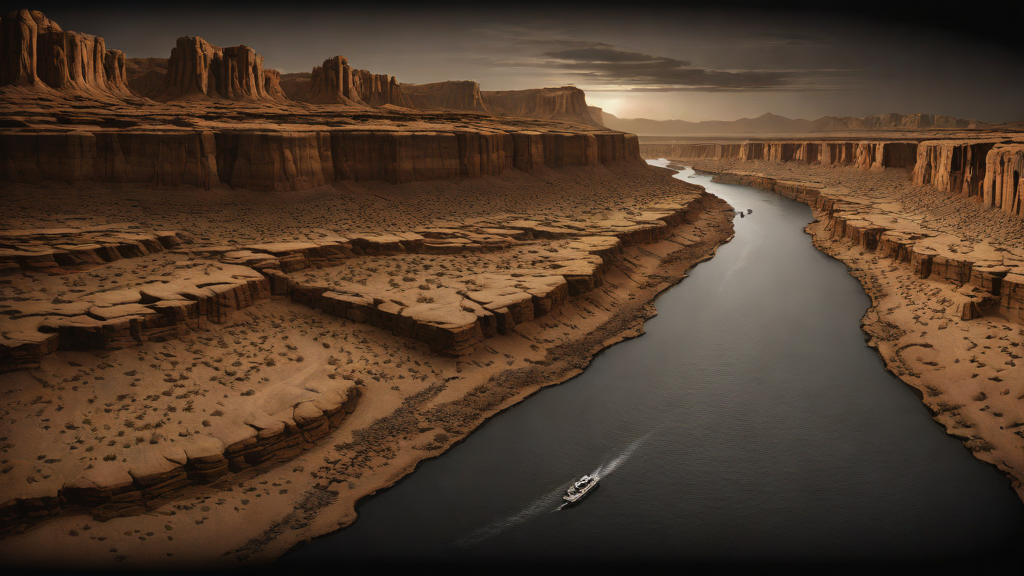
Ancient Colorado River Mystery Solved After 5 Million Years
The disappearance of the Colorado River from the geological record some 5 million years ago has long puzzled scientists. However, UCLA researchers have now cracked the mystery by analyzing zircon deposits in Navajo land near the Grand Canyon, revealing how the river’s path unfolded over millions of years.
According to a new study published in *Science*, the Colorado River originated in western Colorado and flowed through an upstream lake before spilling into the Grand Canyon around 5.6 million years ago. This journey eventually led the river to the Gulf of California, shaping one of North America’s most vital waterways. Lead author John He, Ph.D., described the discovery as a pivotal moment in understanding the region’s geological history and its impact on ecosystems.
The research team identified microscopic zircon crystals in sandstone samples from Bidahochi Lake, an ancient body of water that once spanned across what is now Navajo land. These crystals provided geochemical evidence linking the lake to the Colorado River, supporting the theory that the river’s flow caused the lake to spill over and carve its path through the Grand Canyon. This finding not only explains how the Colorado River navigated high ground like the Kaibab Arch but also sheds light on the iconic landmark’s formation.
The study highlights the role of the Colorado River in connecting ecosystems across the region, as it transported water and sediment across the continent. While the exact timeline and processes behind the Grand Canyon’s carving remain debated among geologists, this discovery marks a significant step toward unraveling one of Earth’s most enduring geological mysteries.
Latest News


