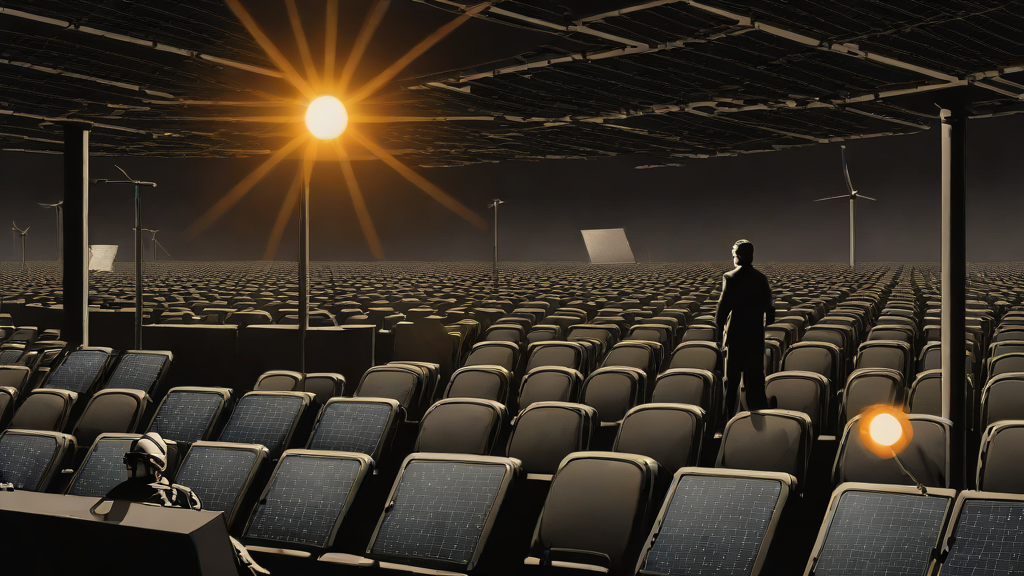
Health Concerns Fuel Backlash Against Solar Energy Expansion
The pushback against large-scale solar projects in Michigan and across the U.S. has gained momentum, driven by concerns over potential health risks that lack scientific backing. Kevin Heath, a farmer from southeastern Michigan, had hoped to install solar panels on his land to alleviate debt and preserve his family’s legacy. However, his plans were derailed when local residents opposed the project, leading to an ordinance banning large-scale solar developments in his township.
Critics of solar energy have raised various arguments, including claims that these projects pose health hazards. Heath dismisses these assertions as unfounded, calling them “just a joke.” Despite the lack of reputable evidence supporting such fears, these concerns have fueled opposition to solar initiatives nationwide. According to an article in the Brigham Young University Law Review, restrictions on solar development often stem from misinformation or unfounded fears about environmental and human safety risks.
Solar energy holds significant potential for Michigan, with projections showing it could contribute substantially to the grid’s capacity. However, the backlash has led to delays and cancellations of projects, even when they meet regulatory requirements. For instance, in Ohio, a solar project was recently rejected due to local opposition, citing health concerns despite initial approval from officials. Similarly, Missouri is considering a bill to halt commercial solar projects until 2027, invoking public health as the rationale.
Experts like Troy Rule, an Arizona State University law professor, argue that solar farms are no more harmful than traditional agriculture. “In fact, it’s even more environmentally friendly,” he said. Michael Gerrard, an environmental lawyer, echoed this sentiment, noting that fears of health impacts are often a guise for opposing renewable energy for other reasons.
The growing skepticism toward solar energy, compounded by the Trump administration’s rollback of federal tax credits, has slowed progress in expanding solar infrastructure. Last year, new solar installations in the U.S. dropped by 14%, highlighting the broader impact of these unfounded concerns on efforts to transition to cleaner energy sources.
Latest News


