A-10 Warthog Thunderbolt II
The Fairchild Republic A-10 Thunderbolt II, widely known as the Warthog, stands as one of the most iconic and recognizable aircraft in the history of the United States Air Force. Designed specifically for the mission of close air support, the twin-engine jet was engineered to provide ground forces with devastating firepower while operating in high-threat environments. Its unique airframe features a high-wing configuration and engines mounted high on the rear fuselage, a design choice that protects the powerplants from ground fire and allows for easier maintenance in austere conditions. Since its introduction in the mid-1970s, the A-10 has earned a legendary reputation for its ruggedness, survivability, and its ability to loiter over the battlefield for extended periods.
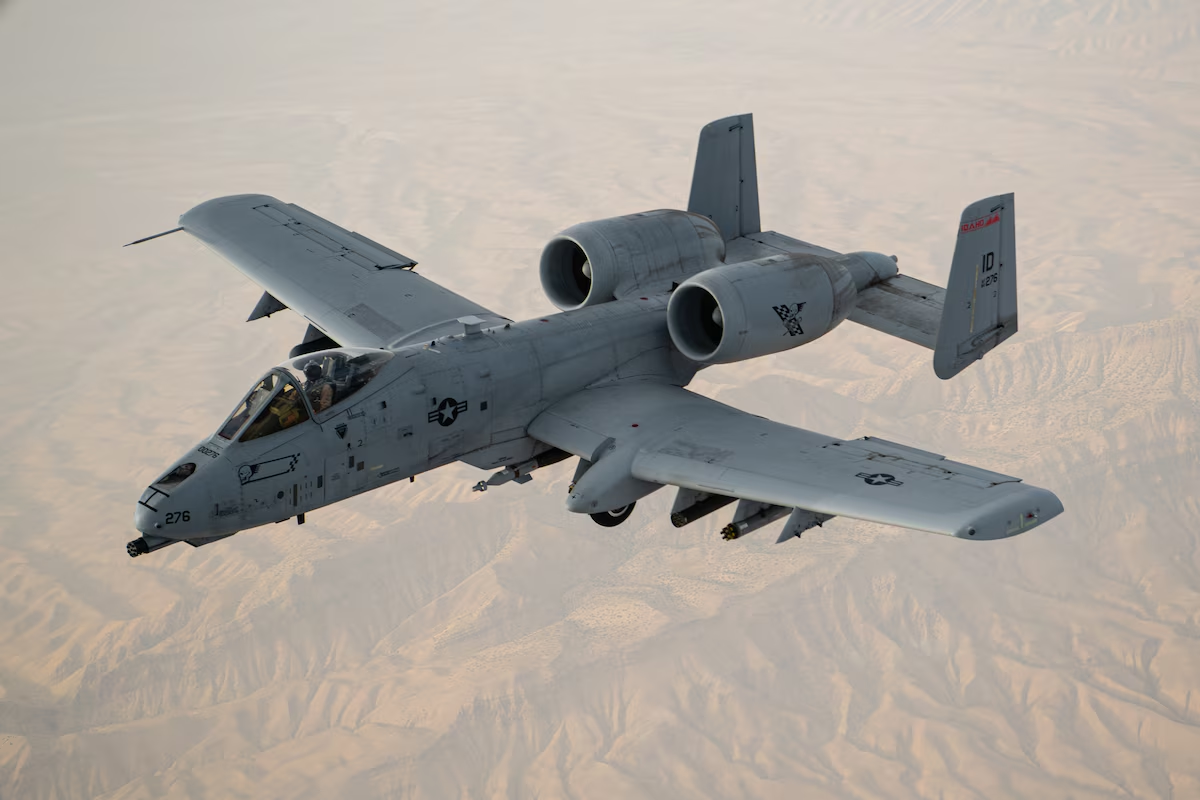
The development of the A-10 was a direct response to the lessons learned during the Vietnam War, where the military identified a critical need for a specialized aircraft capable of destroying armored vehicles and providing precise support to infantry. The aircraft is built around its massive GAU-8/A Avenger 30mm rotary cannon, a weapon so large that the plane was essentially designed to house it. This cannon is capable of firing depleted uranium shells at a rate of nearly 4,000 rounds per minute, allowing the Warthog to shred enemy tanks and fortifications with ease. Beyond its primary gun, the A-10 possesses eleven hardpoints, enabling it to carry an extensive array of munitions including Maverick missiles, laser-guided bombs, and various rocket pods.
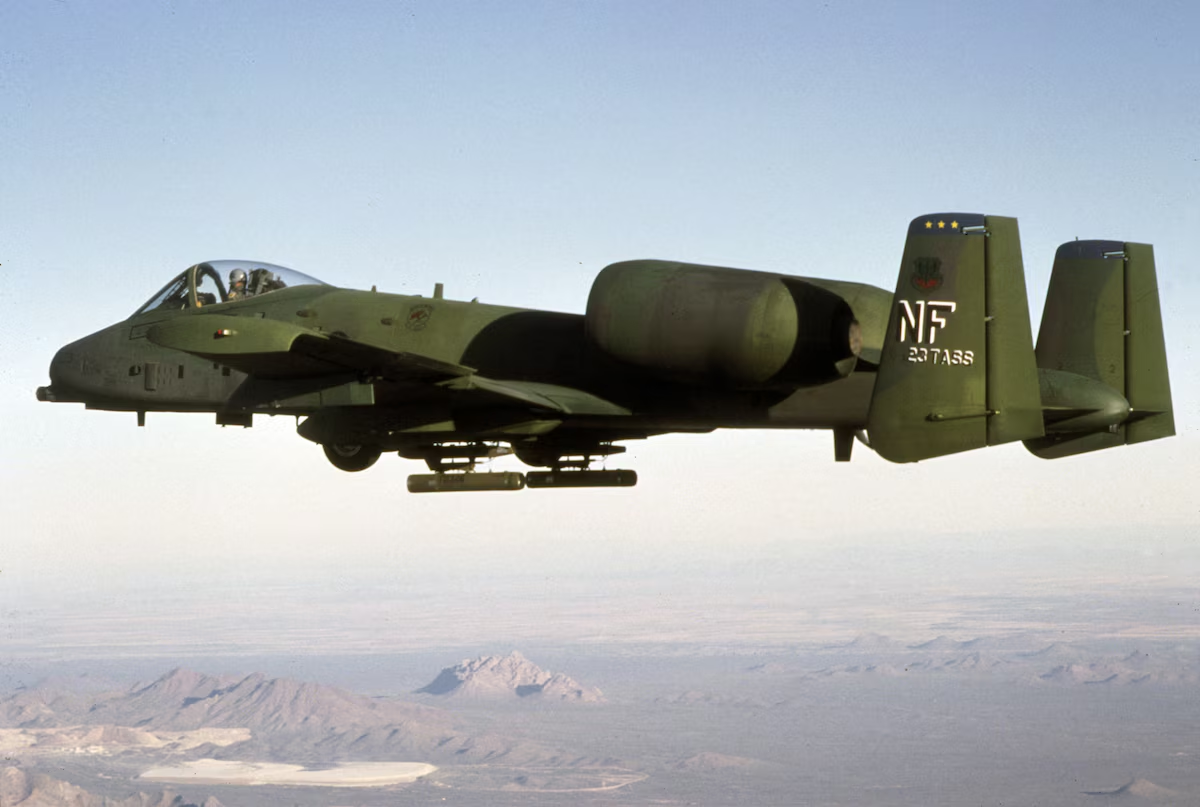
Survivability remains the defining characteristic of the Thunderbolt II. The pilot sits within a titanium bathtub, a heavy-duty armor shell designed to protect against direct hits from anti-aircraft artillery and small arms fire. Furthermore, the aircraft features redundant flight control systems and a structure capable of sustaining significant damage while remaining airborne. This durability has allowed the A-10 to operate in contested airspace where more fragile, high-speed jets might be forced to withdraw. Its flight characteristics prioritize low-altitude maneuverability and slow-speed handling, which are essential for identifying and engaging targets in complex terrain.
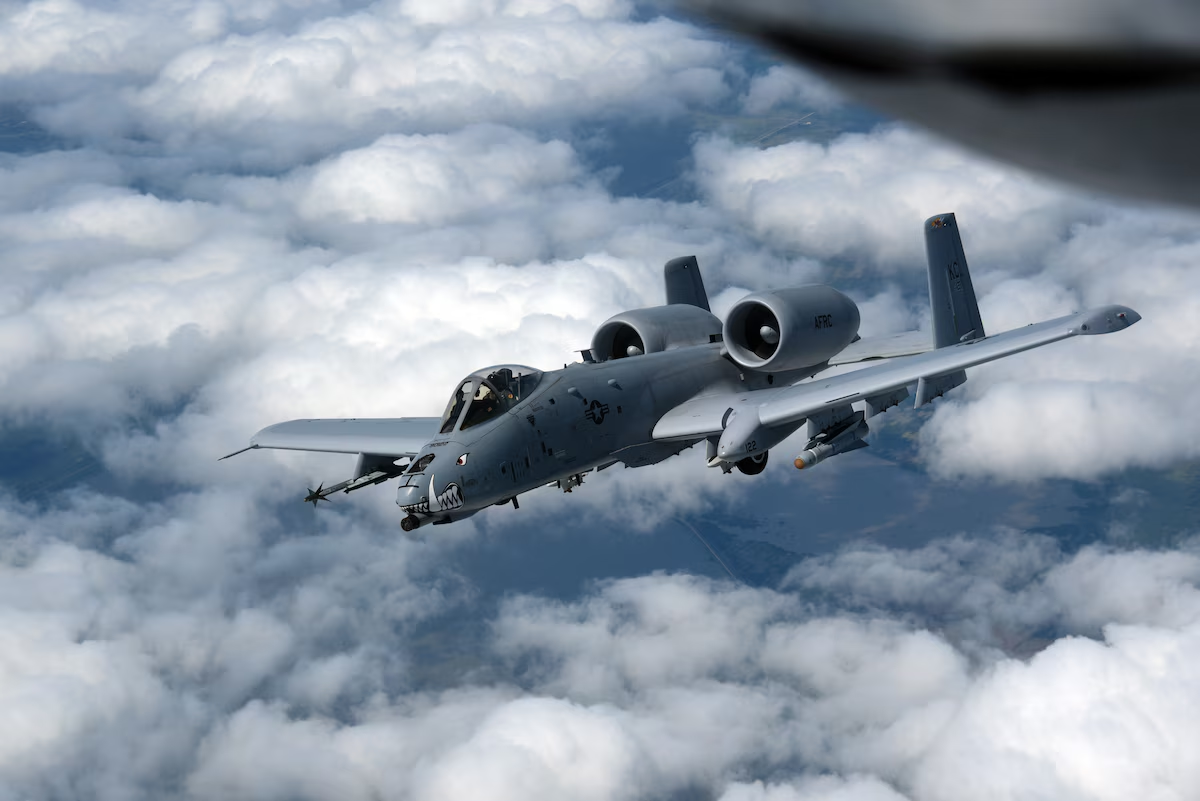
Throughout its service life, the A-10 has proven its worth in numerous conflicts, most notably during Operation Desert Storm, where it destroyed thousands of Iraqi armored vehicles. It also played a pivotal role in the wars in Afghanistan and Iraq, serving as a constant presence for troops on the ground who relied on the Warthog for protection. Despite repeated attempts by the Air Force to retire the fleet in favor of more modern, multi-role fighters, the A-10 has maintained strong support from Congress and ground commanders who argue that no other platform can replicate its specific capabilities.
Today, the A-10 Thunderbolt II remains a testament to the effectiveness of specialized military engineering. While it lacks the stealth technology and supersonic speed of newer platforms like the F-35, its cost-effectiveness and specialized mission profile ensure its continued relevance. As the Air Force gradually transitions toward newer technologies, the Warthog continues to serve as a symbol of American air power, representing a unique intersection of heavy firepower and tactical necessity. It remains a beloved machine among those it has protected, securing its place in aviation history as a master of the close air support mission.
Latest News


