GBU-72 Bunker Buster
The Guided Bomb Unit-72, formally designated as the Advanced 5K Penetrator, represents a significant leap in American ordnance technology designed specifically to neutralize deeply buried and hardened targets. As a 5,000-pound class precision-guided munition, the GBU-72 is engineered to bridge the gap between standard tactical bombs and massive, specialized bunker busters. By integrating advanced guidance systems with a massive kinetic payload, the weapon provides modern air forces with the capability to hold high-value subterranean infrastructure at risk, even when such facilities are protected by significant layers of earth or reinforced concrete.
At its core, the GBU-72 is a sophisticated evolution of existing JDAM technology. It functions by marrying a massive, high-density warhead with the proven tail-mounted guidance kit found on the GBU-31 series. Visually, the weapon is characterized by its imposing size, which dwarfs standard munitions, and it is distinguished by long, stabilizing fins located along the underside of the bomb body. This configuration allows the weapon to maintain aerodynamic stability during high-speed delivery, ensuring that the precision-guidance package can effectively steer the massive kinetic energy of the bomb directly onto the intended impact point.
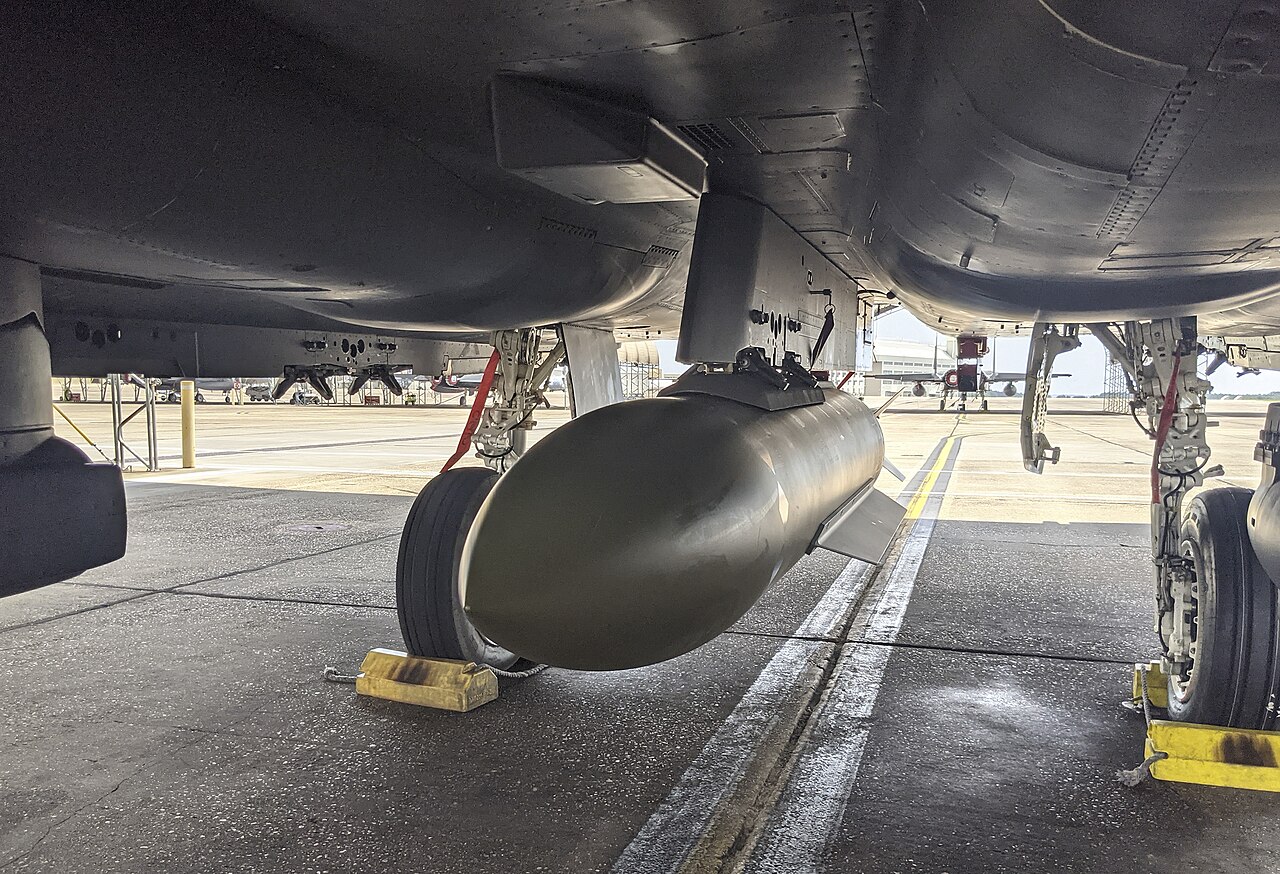
The development and testing of the GBU-72 were centered at Eglin Air Force Base, where engineers sought to ensure that the guidance kits originally designed for 2,000-pound weapons could reliably control a munition more than twice that weight. Between July and October 2021, the 40th and 780th Test Squadrons conducted a series of rigorous flight tests to validate the weapon’s release safety and navigational accuracy. These trials culminated in a successful drop from an F-15E Strike Eagle on October 7, 2021, which served as the final milestone for the initial testing phase and paved the way for subsequent operational integration.
While the exact penetration depth of the GBU-72 remains protected by classification, its lethality is widely considered to be a substantial improvement over legacy systems like the GBU-28. The GBU-28, which served as the primary deep-penetration tool for decades, was capable of piercing over 150 feet of earth or 15 feet of reinforced concrete. Program managers have indicated that the GBU-72 is designed to surpass these benchmarks, offering commanders a more reliable solution for destroying hardened command centers, weapons storage facilities, and subterranean bunkers that were previously considered impervious to conventional air-delivered munitions.
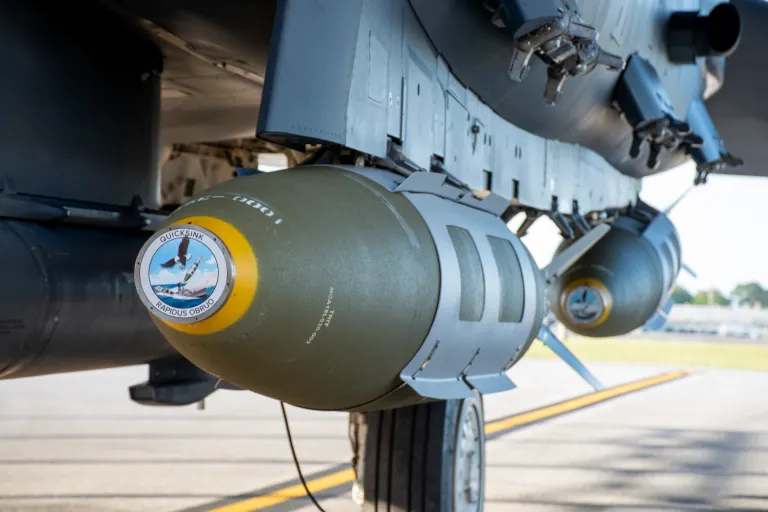
The operational versatility of the GBU-72 is supported by its compatibility with a select group of high-performance aircraft. The United States Air Force utilizes the B-1B Lancer and the F-15E Strike Eagle to deliver the weapon, providing both long-range strike capabilities and rapid-response tactical options. Furthermore, the Israeli Air Force has integrated the system into its F-15I fleet, expanding the reach and effectiveness of allied deep-strike operations. This cross-platform compatibility ensures that the GBU-72 can be deployed across various theaters of operation, from long-duration sorties to time-sensitive tactical strikes.
The combat history of the GBU-72 is marked by its use against high-value, hardened targets in increasingly volatile geopolitical environments. Reports emerged in May 2024 suggesting that the weapon was employed during joint American-British operations in Yemen to dismantle subterranean Houthi facilities. Later that year, in September 2024, the munition was linked to the strike in Beirut that targeted the underground headquarters of Hezbollah’s leadership, though subsequent analysis debated the specific variant used in that instance. These events underscored the weapon’s role as a critical asset in modern counter-insurgency and state-level conflict.
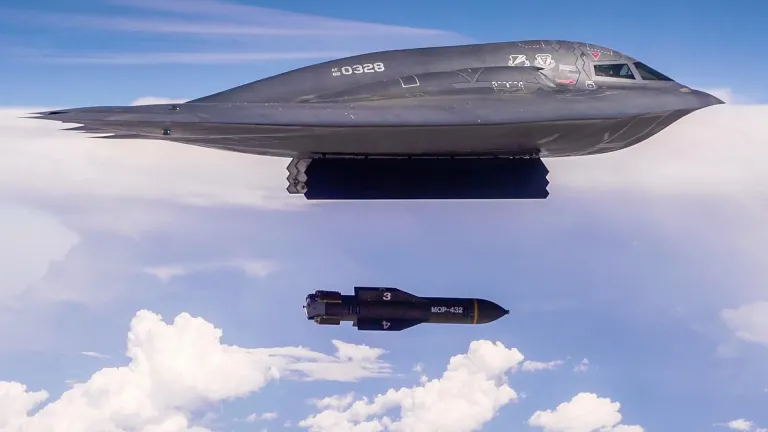
By March 2026, the GBU-72 saw further combat employment during the Iran-war, specifically targeting hardened anti-ship missile sites positioned near the strategic Strait of Hormuz. While United States Central Command confirmed the use of 5,000-pound class penetrators during these engagements, they maintained operational security regarding the specific weapon systems involved. Nevertheless, these strikes highlighted the strategic importance of the GBU-72, demonstrating its ability to neutralize critical maritime-denial infrastructure that could threaten global commerce and naval freedom of movement.
Ultimately, the GBU-72 stands as a testament to the ongoing arms race between defensive fortification and offensive precision. As adversaries continue to bury their most vital assets deeper underground, the demand for munitions that combine massive kinetic force with pinpoint GPS-guided accuracy has only grown. By successfully scaling the JDAM concept to a 5,000-pound platform, the United States has provided its military with a powerful tool that ensures no target is truly beyond reach, regardless of the physical barriers constructed to protect it.
Latest News


