RC-135 Rivet Joint
The Boeing RC-135 Rivet Joint represents the pinnacle of airborne signals intelligence and reconnaissance capability for the United States Air Force and the British Royal Air Force. Developed from the robust C-135 Stratolifter airframe, this family of specialized aircraft serves as a critical asset for theater and national-level intelligence gathering. By providing near real-time collection, analysis, and dissemination of electronic data, the RC-135 allows commanders to maintain an accurate picture of the battlespace. While the fleet has evolved through decades of modifications by various defense contractors, its core mission remains the interception and interpretation of electromagnetic emissions, ensuring that allied forces stay ahead of adversaries in every major conflict since the early 1960s.
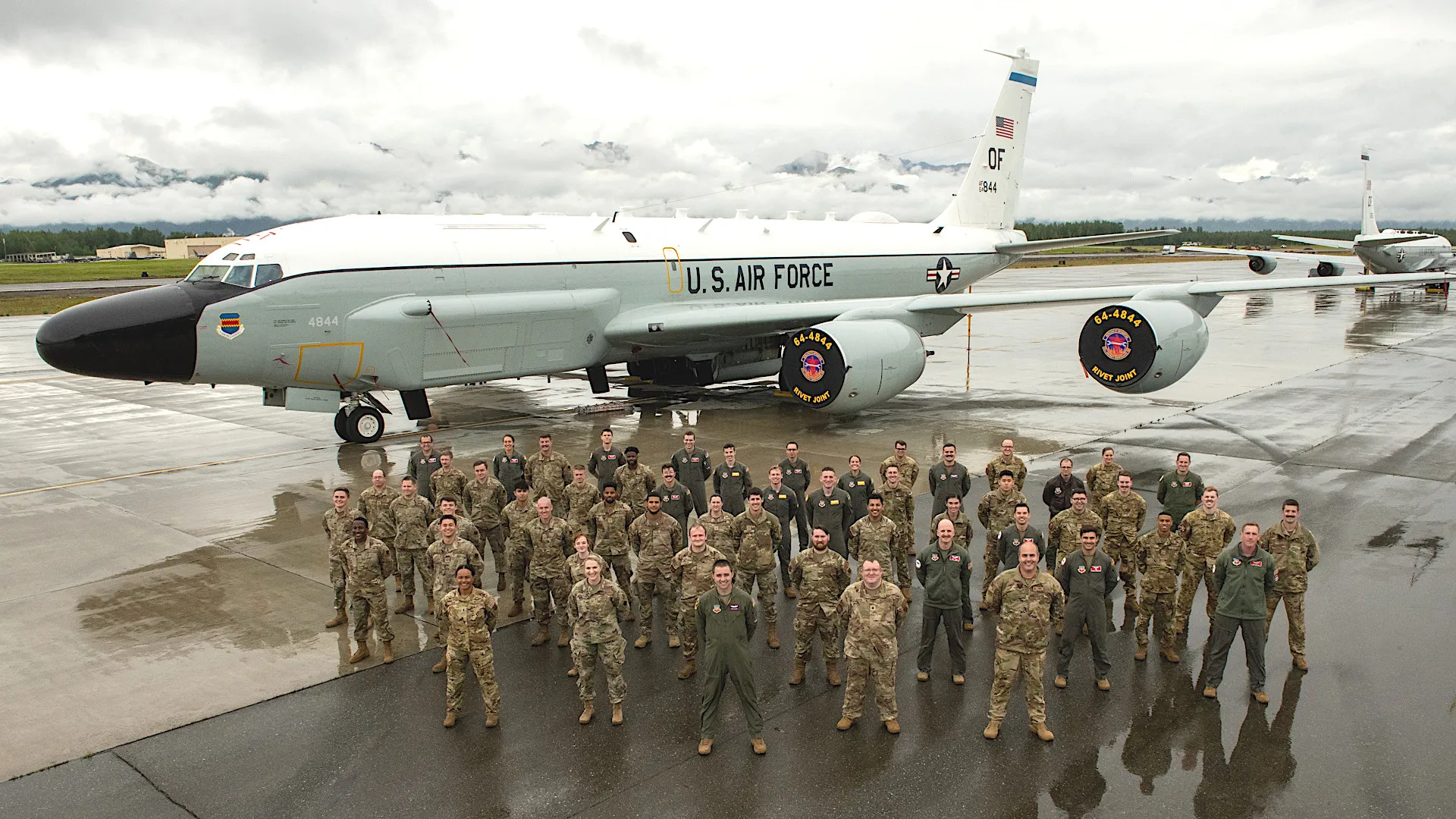
The lineage of the RC-135 is complex, characterized by a constant cycle of upgrades and mission-specific reconfigurations. Although the RC-135A was the first variant designated in the series, it was intended for photographic and surveying tasks rather than the electronic intelligence roles that define the modern fleet. The program truly found its stride with the RC-135B, which transitioned from a basic airframe to a sophisticated electronic intelligence platform. Over time, the fleet moved away from the original Pratt and Whitney J57 engines, eventually adopting the CFM International CFM-56 powerplants. These engines, paired with a comprehensive digital glass cockpit upgrade under the Avionics Modernization Program, have ensured that these aging airframes remain technologically relevant in the twenty-first century.

Operational history for the RC-135 is extensive, spanning the entirety of the Cold War and every major American military engagement thereafter. Initially under the command of the Strategic Air Command, the fleet transitioned to Air Combat Command in 1992 and is currently centered at Offutt Air Force Base in Nebraska. The 55th Wing manages these assets, deploying them globally to support operations ranging from the Vietnam War to the ongoing presence in Southwest Asia. The Rivet Joint program is particularly notable for maintaining the longest unbroken record of continuous combat service in the history of the Air Force, marking over two decades of constant deployment in Central Command by 2010.
The international footprint of the Rivet Joint expanded significantly when the United Kingdom opted to procure three RC-135W aircraft, known as Airseeker, to replace their retired Nimrod R1 fleet. This acquisition was not merely a purchase of hardware but a deep integration of personnel and tactics. British crews from 51 Squadron have worked alongside their American counterparts at Offutt Air Force Base for years, fostering a high level of interoperability. Since their delivery, these British aircraft have been instrumental in coalition operations, including missions against extremist groups in the Middle East and monitoring regional tensions in Eastern Europe, such as those surrounding the 2022 Russian invasion of Ukraine.
Technical evolution within the program has often involved the creative repurposing of existing airframes. Early in the program, the military experimented with converting KC-135 tankers into intelligence platforms to meet urgent needs, such as monitoring Soviet nuclear tests. These makeshift configurations, often featuring unique antenna arrays like the so-called towel bars or specialized nose radomes, laid the groundwork for the more permanent and sophisticated sensor suites found on later variants. Programs like Big Safari have been central to this process, allowing for rapid modification and testing of new electronic sensors to counter emerging threats without waiting for the production of entirely new airframes.
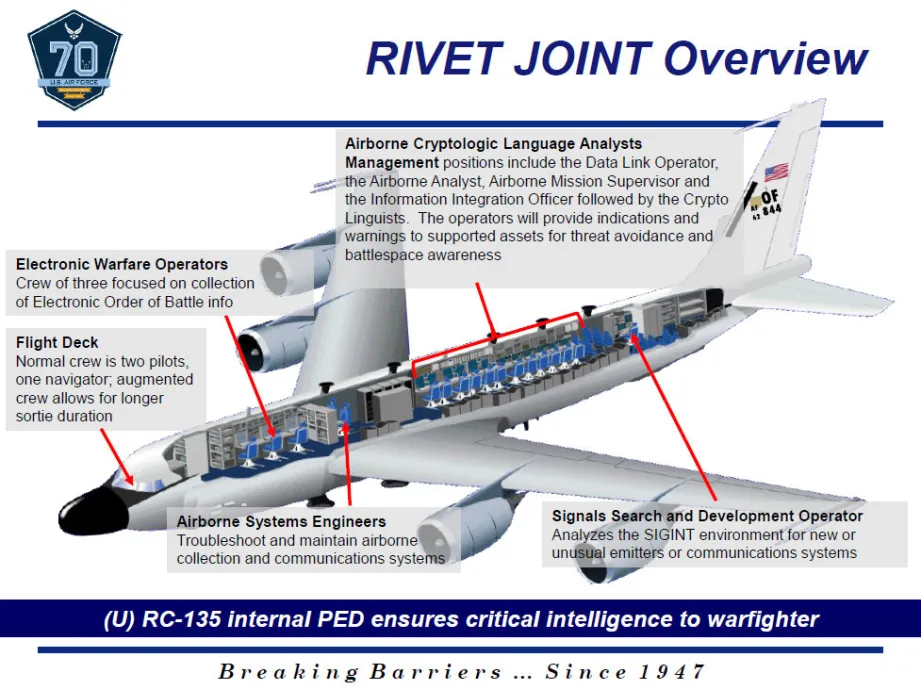
The internal architecture of a modern Rivet Joint is a testament to the complexity of modern warfare. The aircraft is staffed by a diverse crew of pilots, navigators, airborne linguists, and intelligence specialists who work in concert to identify and locate enemy emitters. The signature cheek pods on the forward fuselage house the Automated ELINT Emitter Locating System, which is essential for pinpointing the source of signals in a contested environment. These systems allow the crew to process vast amounts of data, turning raw electronic noise into actionable intelligence that can be shared with ground forces and command centers in a matter of seconds.
As the RC-135 fleet continues to fly, it remains a vital component of global security. The ability to modify these aircraft to meet the demands of a changing technological landscape ensures that they remain effective against both conventional and asymmetric threats. From the early days of monitoring Soviet client states to the modern era of tracking sophisticated anti-access, area-denial networks, the Rivet Joint has consistently proven its worth. Despite the age of the underlying airframes, the continuous investment in mission systems, engine efficiency, and digital integration guarantees that the RC-135 will remain a cornerstone of Western intelligence, surveillance, and reconnaissance operations for the foreseeable future.
Latest News


