UH-60 / UH-60M BlackHawk Helicopter
The Sikorsky UH-60 Black Hawk stands as a cornerstone of modern military aviation, serving as a versatile, four-bladed, twin-engine medium-lift utility helicopter. Developed by Sikorsky Aircraft, the platform was the successful result of the United States Army's Utility Tactical Transport Aircraft System competition initiated in 1972. Following a rigorous fly-off against the Boeing Vertol YUH-61, the Army selected the Sikorsky design in 1976. Named in honor of the renowned Native American war chief, the Black Hawk officially entered service in 1979, marking a significant transition as it began replacing the aging Bell UH-1 Iroquois fleet. Over the subsequent decades, the airframe has evolved into a global standard for tactical transport, special operations, and medical evacuation.
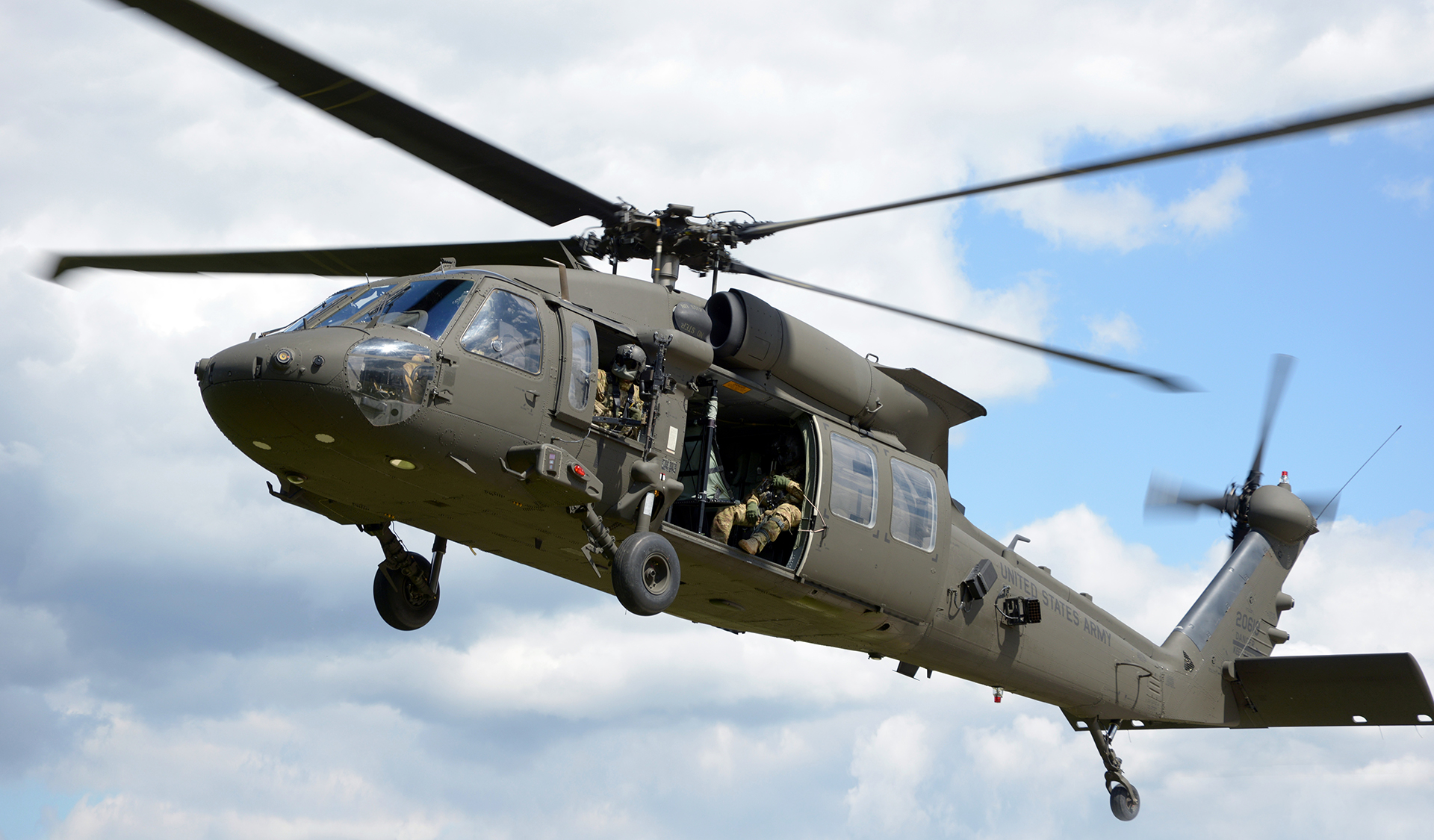
The development of the Black Hawk was driven by lessons learned during the Vietnam War, which highlighted the urgent need for enhanced reliability, survivability, and performance in challenging environments. The Army's requirements emphasized a modular design to reduce maintenance burdens, alongside critical safety features such as run-dry gearboxes, redundant flight control systems, and crashworthy structures. To ensure the helicopter could be deployed rapidly across the globe, the design team engineered the aircraft to fit within the cargo hold of a C-130 Hercules transport plane. These engineering choices, combined with the power of the General Electric T700 turbine engine, allowed the Black Hawk to excel in high-altitude and hot-weather conditions that had previously hindered its predecessors.
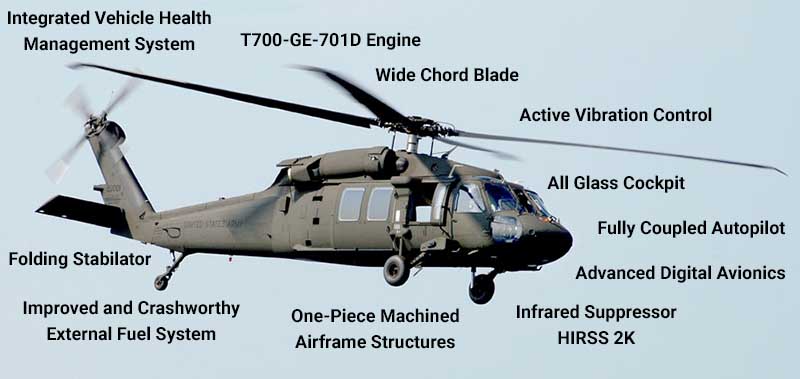
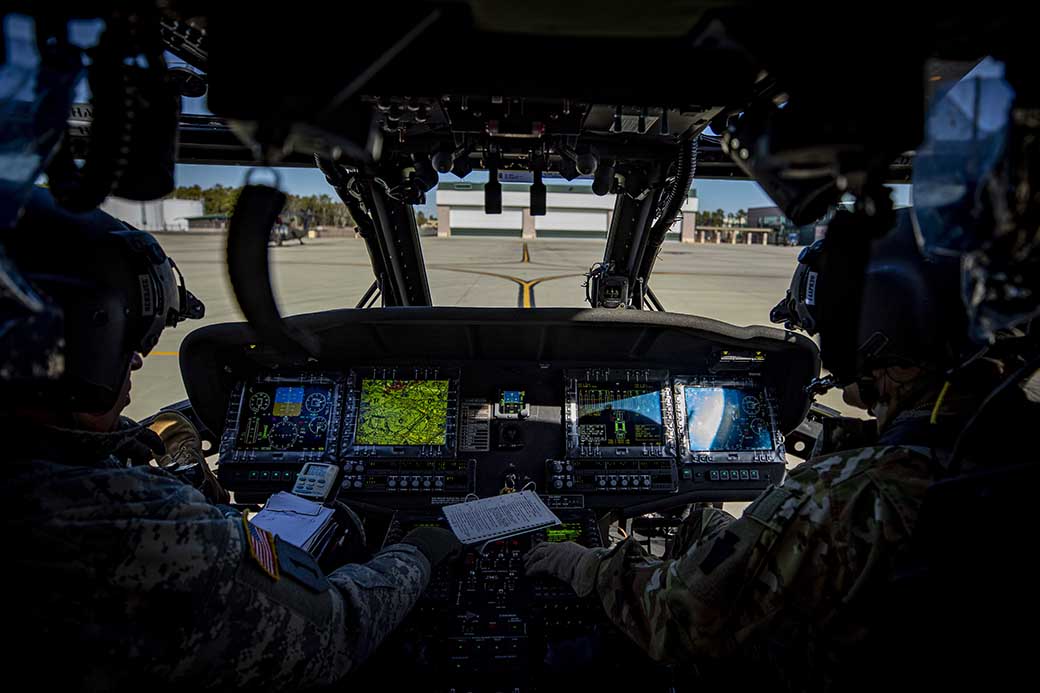
As the operational requirements of the U.S. military shifted, the Black Hawk platform underwent continuous refinement. The introduction of the UH-60L in 1987 addressed the need for increased lifting capacity, incorporating more powerful engines and an upgraded automatic flight control system derived from the Navy's SH-60 Seahawk variant. This evolution continued into the 21st century with the UH-60M, which featured advanced digital instrumentation, improved rotor blades, and enhanced navigation systems. These upgrades were designed to extend the service life of the fleet well into the 2020s, ensuring that the Black Hawk remained at the forefront of combat capability. By 2007, the Army had committed to full-rate production of the M-model, cementing its role as the primary workhorse for infantry and logistics support.
The versatility of the H-60 family is perhaps its most defining characteristic, as the basic airframe has been adapted for a wide array of specialized missions. Beyond the standard utility role, the platform has been modified for electronic warfare, mine laying, and high-stakes special operations. One of the most secretive iterations of the aircraft gained international attention following the 2011 raid that resulted in the death of Osama bin Laden. Analysis of the wreckage from that mission revealed that the 160th Special Operations Aviation Regiment utilized a heavily modified, low-observable variant. This stealth-capable Black Hawk incorporated noise-reduction technology, specialized materials, and unique geometric shaping designed to evade radar detection, demonstrating the platform's adaptability to the most demanding clandestine requirements.
Technically, the Black Hawk is a marvel of rotorcraft engineering. It utilizes a fully articulated main rotor system with elastomeric bearings and a canted tail rotor to provide superior maneuverability. The helicopter is capable of transporting a squad of 11 combat-ready troops or lifting significant external loads via a sling system, with the UH-60L and M variants capable of carrying up to 9,000 pounds. To expand its operational range and offensive capabilities, the aircraft can be equipped with the External Stores Support System. This system allows for the attachment of stub wings that carry additional fuel tanks or a variety of armaments, including rockets and gun pods, providing the necessary firepower for air assault operations.
The global footprint of the Black Hawk is extensive, with the aircraft currently in service with over 35 nations. Its international success is bolstered by the existence of various specialized versions, such as the Navy's SH-60 Seahawk, the Air Force's HH-60 Pave Hawk, and the Coast Guard's MH-60 Jayhawk. Some nations, such as Japan, have even produced the aircraft under license through Mitsubishi. Australia serves as a notable example of the helicopter's enduring relevance; after retiring its initial fleet of S-70A-9s, the Australian government opted to acquire the modern UH-60M in 2023 to address performance gaps in its existing rotary-wing inventory.
Looking toward the future, the Black Hawk remains a subject of constant innovation. Recent initiatives, such as the Combat Tempered Platform Demonstration, focus on integrating zero-vibration systems, advanced fire management, and damage-tolerant airframes to further increase the survivability of the aircraft. Additionally, the military has looked to improve logistical efficiency in the field through systems like the Enhanced Speed Bag System, which allows for safer and more accurate aerial resupply. While the U.S. military eventually plans to transition to the Future Vertical Lift program, the Black Hawk continues to serve as the backbone of tactical aviation, proving that a well-designed, adaptable platform can remain relevant for nearly half a century.
Latest News


